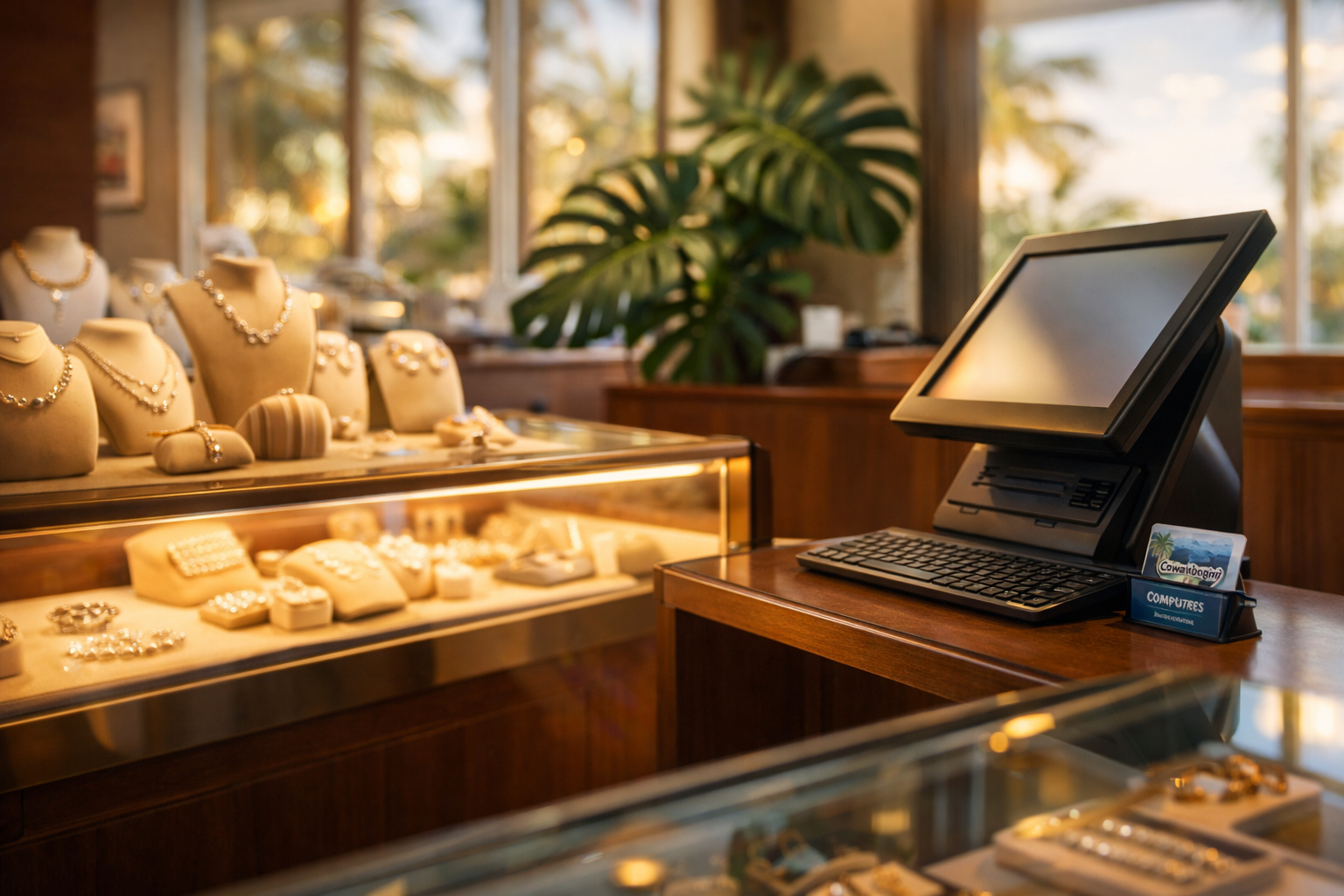
When a luxury jewelry retailer with six locations across Oahu, Maui, and the Big Island called us, they were in trouble. A ransomware attack had encrypted every bit of data on their main server, locking them out of the point-of-sale systems that kept their stores running. Business was at a standstill, and they needed help fast.
What Went Wrong
The attack came through an open Remote Desktop Protocol (RDP) port, which is basically a door that lets someone control a computer from another location. Their previous IT provider had left port 3389 wide open to the internet, and attackers used a brute force method (trying thousands of password combinations until one works) to break in.
To make matters worse, the "server" running their entire multi-location operation was actually an old desktop computer. It was never built for the job, and it certainly wasn't built to withstand an attack like this.
Getting Back on Their Feet
Our first priority was restoring operations as quickly as possible. We built a temporary high-end workstation and installed Windows Server 2022, setting up a proper domain environment to stabilize things while we worked on the longer-term fix.
The client's POS system, Edge, runs on a peer-to-peer network. That turned out to be a silver lining. We coordinated directly with the Edge team to pull POS data from the other store locations and sync everything back together. All six retail sites were back up and processing sales.
A Permanent Fix with Zero Downtime
A temporary workstation wasn't a long-term answer. We ordered a commercial-grade Dell server built to handle their workload, but the client couldn't afford to go offline again while we made the switch.
So we used Hyper-V, a virtualization tool that lets you run a full server environment inside another machine. We set up the new server alongside the temporary one and performed a live migration, moving everything over without a single minute of downtime. The staff didn't even notice the switch happened.
Locking Down the Network
With operations restored, we turned our attention to making sure this never happened again. We rolled the client onto our managed services plan, which included:
Managed firewalls with site-to-site VPNs. Every location now connects securely through encrypted tunnels instead of exposed ports. This also dramatically improved the speed and reliability of data syncing between stores.
Custom PowerShell monitoring scripts. Edge's built-in syncing system had a habit of failing silently or corrupting files. We wrote custom scripts that watch the sync process and alert us the moment something goes wrong. What used to snowball into weeks of broken data now gets fixed the same day.
Dedicated support hours. Their team has a pool of support hours they can tap into whenever a staff member needs technical help. No more scrambling to find someone when something breaks.
The Results
The difference has been night and day. Syncing failures that used to happen multiple times a week now occur roughly once a month, and when they do, our monitoring catches them immediately. The weeks-long delays from corrupted POS data are gone.
Their network is secured behind properly configured firewalls. Their server is commercial-grade hardware that's actually built for the job. And their staff knows exactly who to call when they need help.
For a business that deals in high-value merchandise across multiple Hawaiian islands, that kind of reliability isn't a luxury. It's a necessity.
Could This Happen to Your Business?
Ransomware attacks aren't just a big-corporation problem. Small and mid-sized businesses across Hawaii get targeted every day, often because of simple oversights like an open port or an outdated machine running critical systems.
If you're not sure how your network is set up, or if the last time someone looked at your security was "a while ago," it's worth a conversation. Give the Cowabunga! Computers team a call at 808-468-4416 or visit www.smartcows.com. We'll take an honest look at where things stand and help you figure out what actually needs attention.